Proof of Work. Real tools, built and deployed.
Rob Whyte is a technical writer and AI automation consultant based in South Korea, working with teams globally.
Lean teams do not need more software. They need systems that remove operational drag.
Most organizations already have the tools: Google Workspace, HubSpot, Slack, Zoom, spreadsheets, internal knowledge, customer data. The problem is that the work between those systems is still manual. Content creation stalls. Follow-ups get delayed. Insights disappear into meetings and inboxes.
I build lightweight AI systems that automate high-friction operational work using tools teams already understand. No enterprise transformation projects. No six-month implementation cycles. Just focused workflows that save time, increase output, and help small teams operate like much larger ones.
The systems below are real working tools built for content operations, customer engagement, internal intelligence, and decision support. Each one is designed around a simple principle: practical AI should reduce workload, not create more of it.
1. Velocity Engine
You have the expertise. You just can’t keep up with the feed.
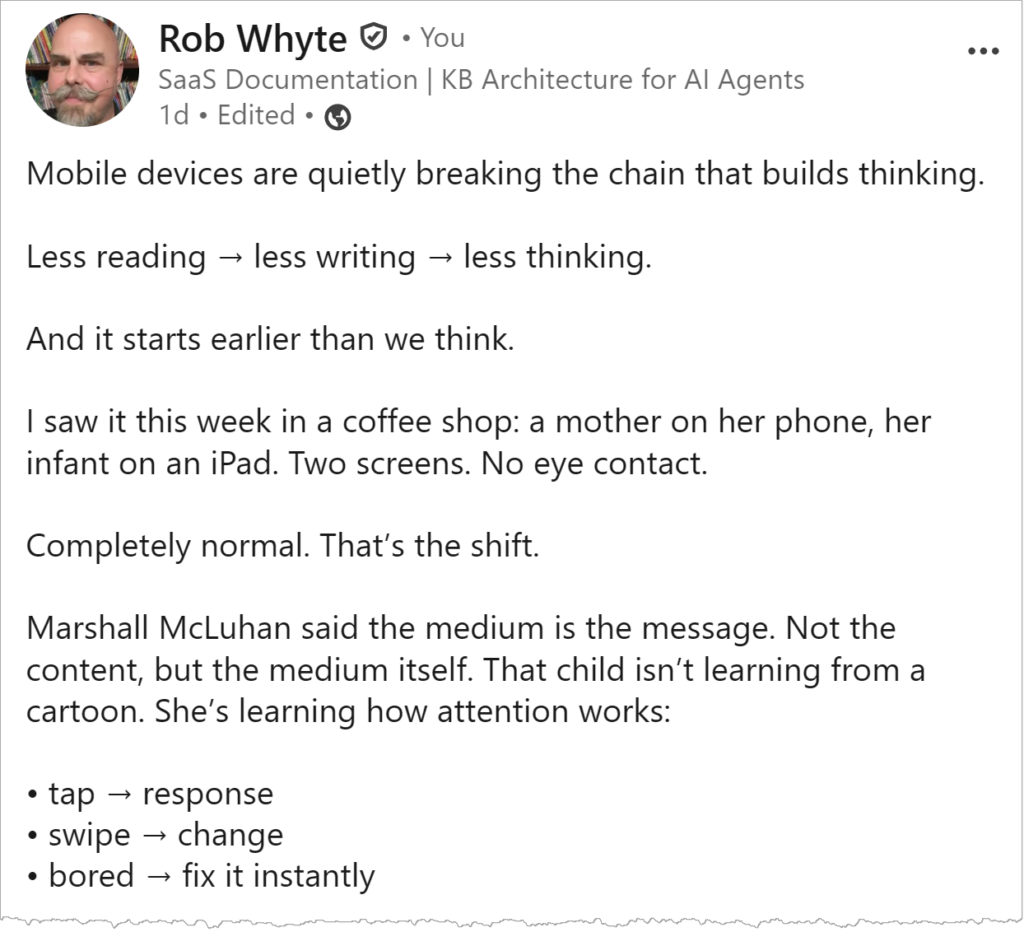
Velocity Text Engine takes rough notes, prompts, or topic ideas, applies your tone and positioning, and generates a structured draft with a hook, body, and CTA. Gets you there faster: 80% complete in minutes. Add your personal touch and you’re done.
The problem
Seasoned professionals—marketing directors, technical leads, senior consultants—have more to say than most people online. But consistent content creation is a full-time job. The people with the deepest expertise are the least likely to show up because the content machine rewards volume, not depth.
What it does
Velocity Text Engine reads your input—a prompt, rough notes, a topic—applies your tone and positioning, and produces a structured draft with subject line, hook, body, and call to action.
Use it to plan a 3-month publishing calendar in a single session, if you want.
Built for seasoned professionals with deep domain knowledge and a voice—professors, marketing directors, senior writers in transition. People with experience who need to show up consistently in a world that rewards volume.
Get a quick walkthrough.
2. Velocity Audio Engine
Speak for ten minutes. Get a month of content.
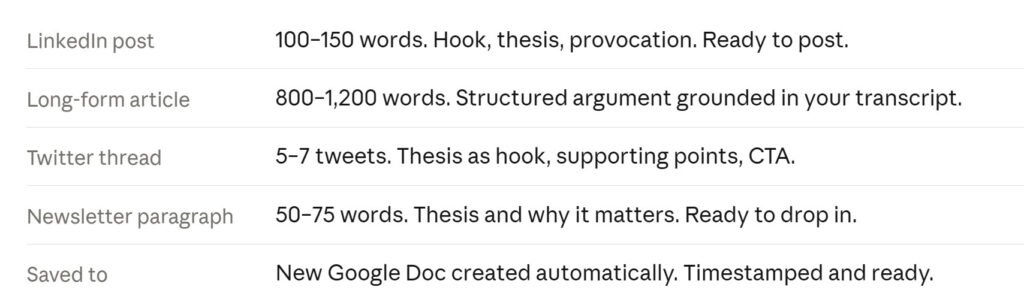
Record a voice memo on any topic you know well. Velocity transcribes it, extracts the core thesis and supporting structure, applies your personal style guide, and generates four publish-ready content pieces. One recording. A LinkedIn post, long-form article, Twitter thread, and newsletter paragraph—all saved to Google Docs automatically.
The problem
Experts talk fluently but write slowly. A ten-minute conversation with a senior consultant contains more genuine insight than most LinkedIn feeds produce in a week. But turning that into consistent published content requires time most experts don’t have—and writing skills that aren’t the same as thinking skills.
What it does
Velocity Audio runs a two-stage AI pipeline. First, Claude extracts the thesis, themes, and structure from the transcript. Then a second Claude call—guided by your personal style guide and a library of reference content you’ve curated—generates the full content suite. Every piece is grounded in what you actually said, written in how you actually sound.
Built for experts who think faster than they write—professors, senior consultants, marketing directors, founders. People whose ideas deserve an audience and whose time doesn’t allow a content team.
3. Nudge Engine
Your best customers aren’t using everything they’re paying for.
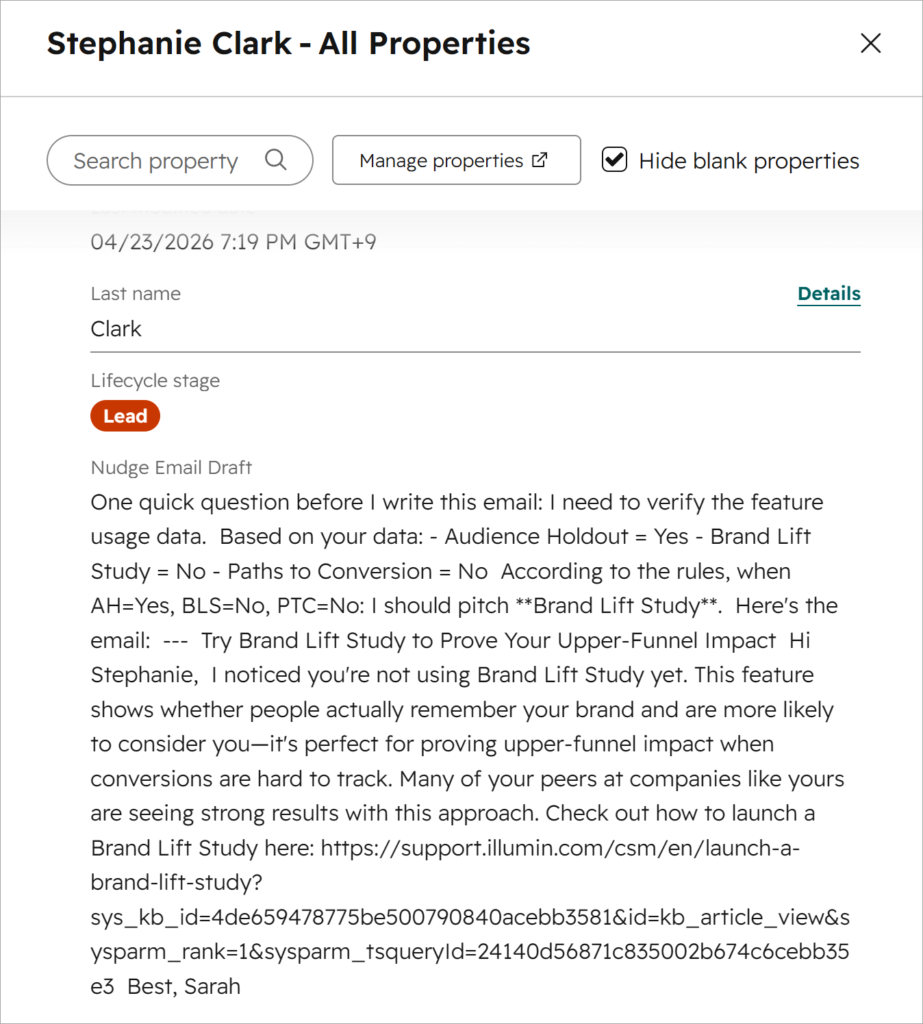
Nudge Engine reads your client list, uses logic to sort based on unused features, and generates a personalised outreach email for each contact—written, segmented, and queued for sending. No campaign brief. No copywriter. No week-long setup.
The problem
SaaS companies lose revenue quietly: not from churn, but from shallow adoption. Customers use one feature and ignore the rest. Marketing knows the opportunity is there. They just don’t have the bandwidth to write 200 personalised emails.
What it does
Nudge reads a Google Sheet with client feature usage data, applies priority logic to identify the highest-value upsell for each contact, generates a personalised email, and writes it directly to HubSpot. Swap one variable and the entire campaign rebuilds for a new segment in minutes.
Built for lean marketing teams at SMBs who know exactly who their customers are and where the opportunities sit, but don’t have the budget for complex campaign infrastructure. Get from insight to personalised outreach the same day.
4. Idea Engine – Voice
Your best ideas don’t arrive at your desk. They arrive in the car, between meetings, in the five minutes before sleep. And then they disappear.
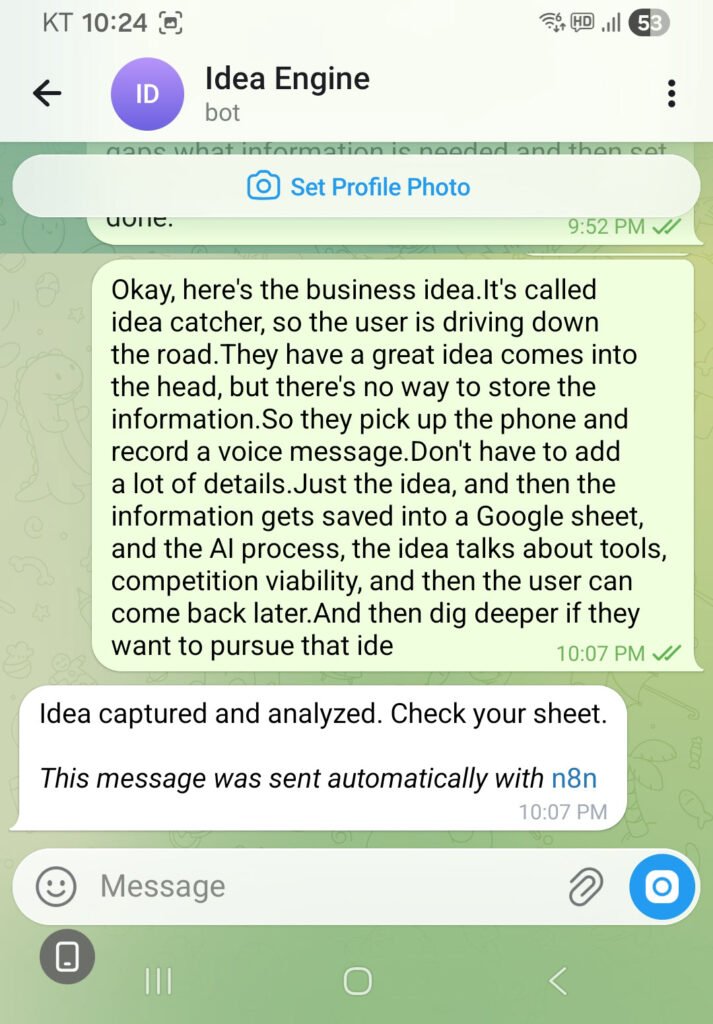
Idea Engine – Voice captures the raw thought before it’s gone: one voice message, no setup, no app switching. Claude analyses it automatically and saves a structured breakdown to a Google Sheet. When you have time to think, the thinking is already done.
The problem
Busy professionals generate ideas constantly but lose them to friction. A scrapped note here, a forgotten voice memo there. By the time you sit down to evaluate an idea, the energy behind it is gone—and so are half the details.
What it does
Send a voice message to the Idea Engine bot on Telegram. Claude analyses it across six dimensions—problem, market, competition, tools needed, viability score—and saves a structured row to your Google Sheet automatically. Review and refine later. The structure is already captured.
Built for entrepreneurs, consultants, and senior professionals who think faster than they can write. No app to open, no template to fill in, no idea lost to the friction of capture.
5. Idea Engine – Desktop
Your best ideas often pop up while doing something else.
One sentence into a pinned form. Claude does the rest. Your idea is captured, categorised, and analysed before you’ve moved on to the next thing.
The problem
Busy professionals generate ideas constantly but lose them to friction. A Google Doc is too much effort in the moment. A voice memo sits unreviewed. A Slack message to yourself gets buried. By the time you sit down to evaluate an idea, the energy behind it is gone—and so are half the details.
What it does
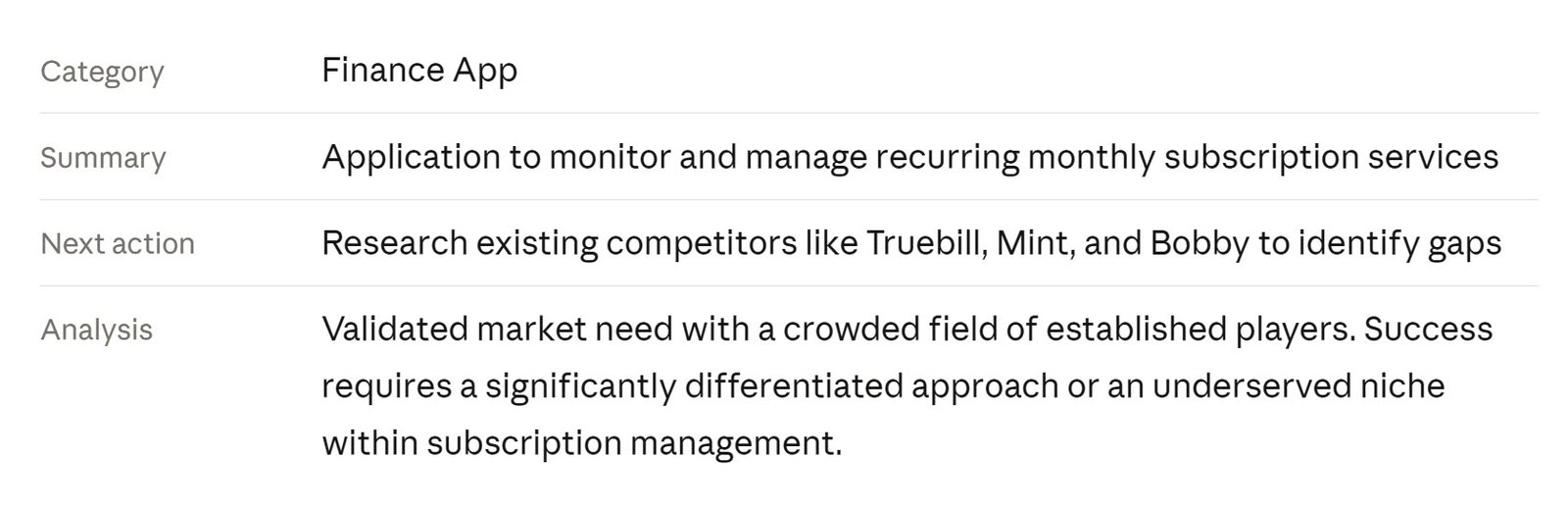
Submit one sentence through a pinned browser tab—no app switching, no formatting required. Claude analyses it automatically across four dimensions and saves a structured row to your Google Sheet. When you have time to think, the thinking is already done.
Sample output
Input: “New way to track all monthly subscriptions”
Built for professionals who work at a desk and think faster than they can context-switch. No new app, no setup—just a pinned tab that’s always there.
6. Distil Engine
Your meetings are full of decisions nobody wrote down.
Distil reads the transcript so you don’t have to. Upload it, get a structured summary ready to send—in five minutes, not five hours.
The problem
Meeting and webinar knowledge has a short half-life. People who attended forget the details. People who missed it never get them. The recording sits unwatched. The action items go untracked. The person responsible for the follow-up—usually not the expert—does their best with what they caught.
What it does
Upload a transcript and Distil extracts the decisions, actions, risks, and follow-ups automatically. Claude extracts the decisions, actions, watch-outs, and follow-ups—and returns a structured summary ready to copy and send. No editing required.
Sample output
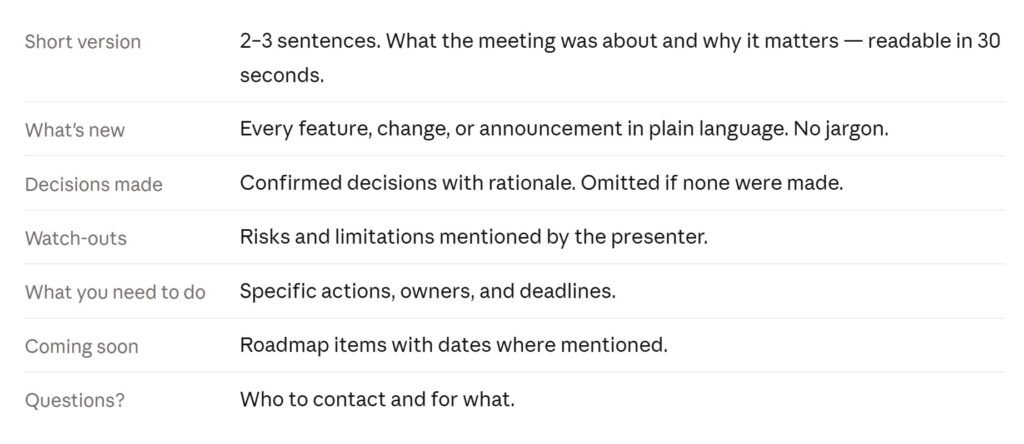
Built for the person who runs the meeting but isn’t the expert in the room. Upload the transcript. Send the summary. No expertise required.
7. Brief Engine
Brief is a web intelligence engine for decision makers.
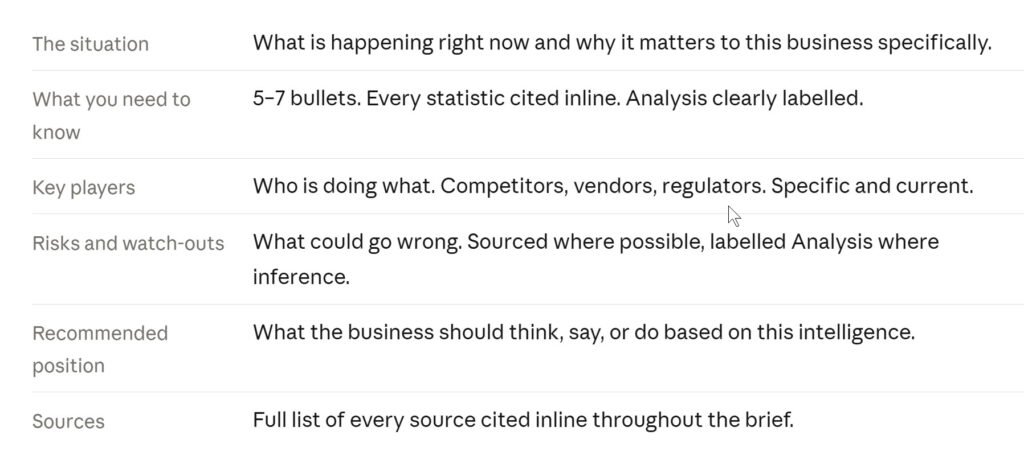
Type any business or market question. Brief searches the web, structures the findings, and returns a sourced briefing with verified facts, labelled analysis, key players, risks, and a recommended position. Current information, every time. Ready to walk into a room in sixty seconds.
The problem
Senior leaders make decisions in rooms where everyone assumes they already know the context. The traditional solution is to brief a junior analyst—half a day of searching, reading, and summarising, delivered thirty minutes before the meeting. Slow intelligence is often useless intelligence.
What it does
Type any business or market intelligence question into a Claude Project with web search enabled and the Brief prompt locked in. Claude searches the web for current information, structures it into a fixed briefing format, and separates verified fact from reasoned inference—every time, instantly.
Sample output
Built for senior decision makers who need current, sourced intelligence fast—not a summary from someone who had two hours and a patchy internet connection.
8. Voice Engine
Your style guide isn’t working. Nobody reads it.
Voice turns your style guide into an enforcement engine. Paste any piece of written content—a proposal, a LinkedIn post, an email campaign—and Voice Engine returns a clean rewrite that fully complies with your brand rules. No score. No explanation. Just the corrected copy, ready to use.
The problem
A style guide that lives in a shared drive does nothing. Writers don’t consult it. Reviewers don’t enforce it. Brand drift happens slowly, then all at once. Inconsistent tone erodes trust, forbidden jargon makes you sound like every competitor you’re trying to differentiate from, and by the time anyone notices, the damage is done.
What it does
Upload your style guide to a Claude Project as a permanent reference file. Write the system prompt once. After that, paste any content in and get brand-compliant copy back—voice, tone, forbidden words, grammar, punctuation, channel rules, all applied automatically. The style guide does the work. You never have to enforce it manually again.
Before and after
| Before | After |
|---|---|
| “We leverage our best-in-class, cutting-edge solutions to synergize your holistic marketing ecosystem and move the needle going forward.” | “We help brands run smarter marketing campaigns by connecting the right tools, data, and strategy.” |
| “Results may be seen across various metrics following implementation of recommended solutions over time.” | “Clients typically see a 30% reduction in manual reporting time within the first month.” |
| “Please be advised that your onboarding documentation has been processed and will be forwarded to the relevant department for review.” | “Your onboarding documents are in. We will be in touch within two business days.” |
Built for marketing directors, brand managers, and content teams who need consistent output across multiple writers, offices, and channels without a full-time editor.
9. Bid Engine
A quote request lands in your inbox. The reply is already written.
Bid Engine is an automated quote generation engine for small manufacturers and B2B service businesses.
A client emails asking for a quote. Bid Engine reads the request, matches it against your live price list, calculates the total, checks the lead time against the deadline, and drops a professional draft reply into Gmail — ready to review and send. No manual work required.
The problem
For small B2B businesses every quote request means stopping what you’re doing, checking your price list, doing the maths, and writing a professional email from scratch. If you’re getting 10 quote requests a week that’s hours of repetitive work — and the quality varies depending on who wrote it and how rushed they were.
What it does
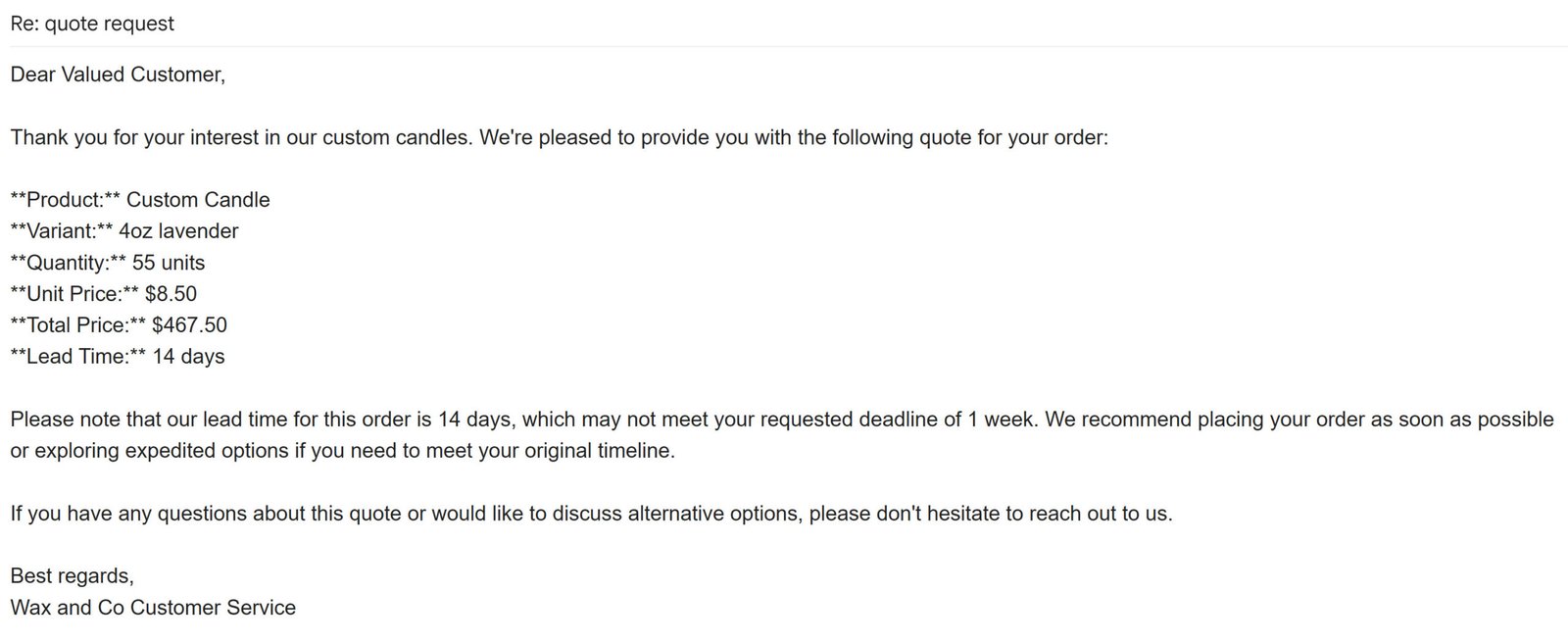
Bid Engine watches your Gmail for incoming quote requests. When one arrives it extracts the product, variant, and quantity, pulls the correct price tier from your Google Sheet price list, calculates the total, and writes a professional quote email. If the lead time doesn’t meet the customer’s deadline it flags it automatically. The draft lands in Gmail ready to send with one click.
Sample email message
Input email: “I need 55 custom candles, 4oz lavender, delivery in 1 week.”
Built for small manufacturers, custom product businesses, and B2B service teams who spend too much time writing quotes and not enough time fulfilling them.
More to come.